



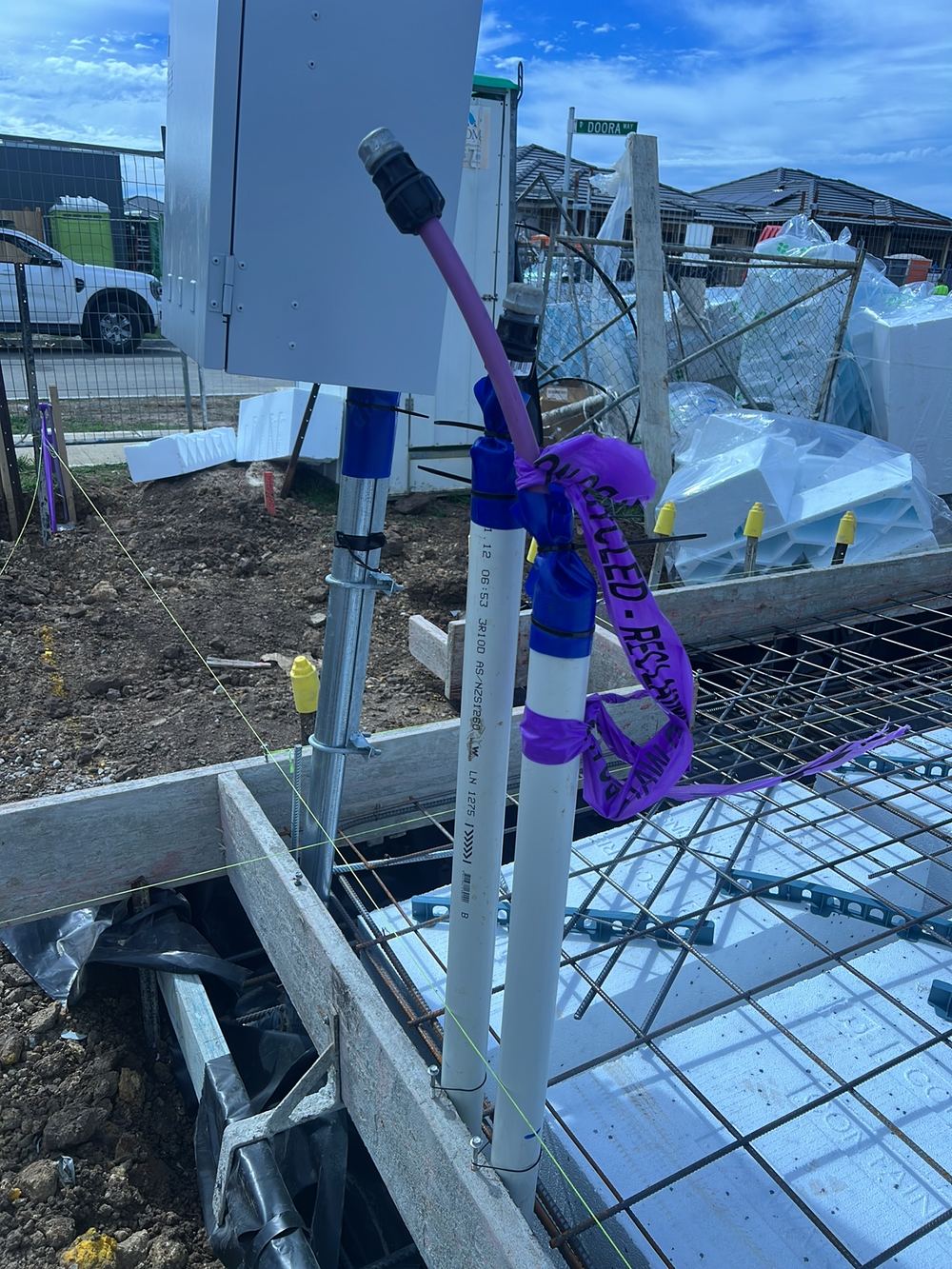
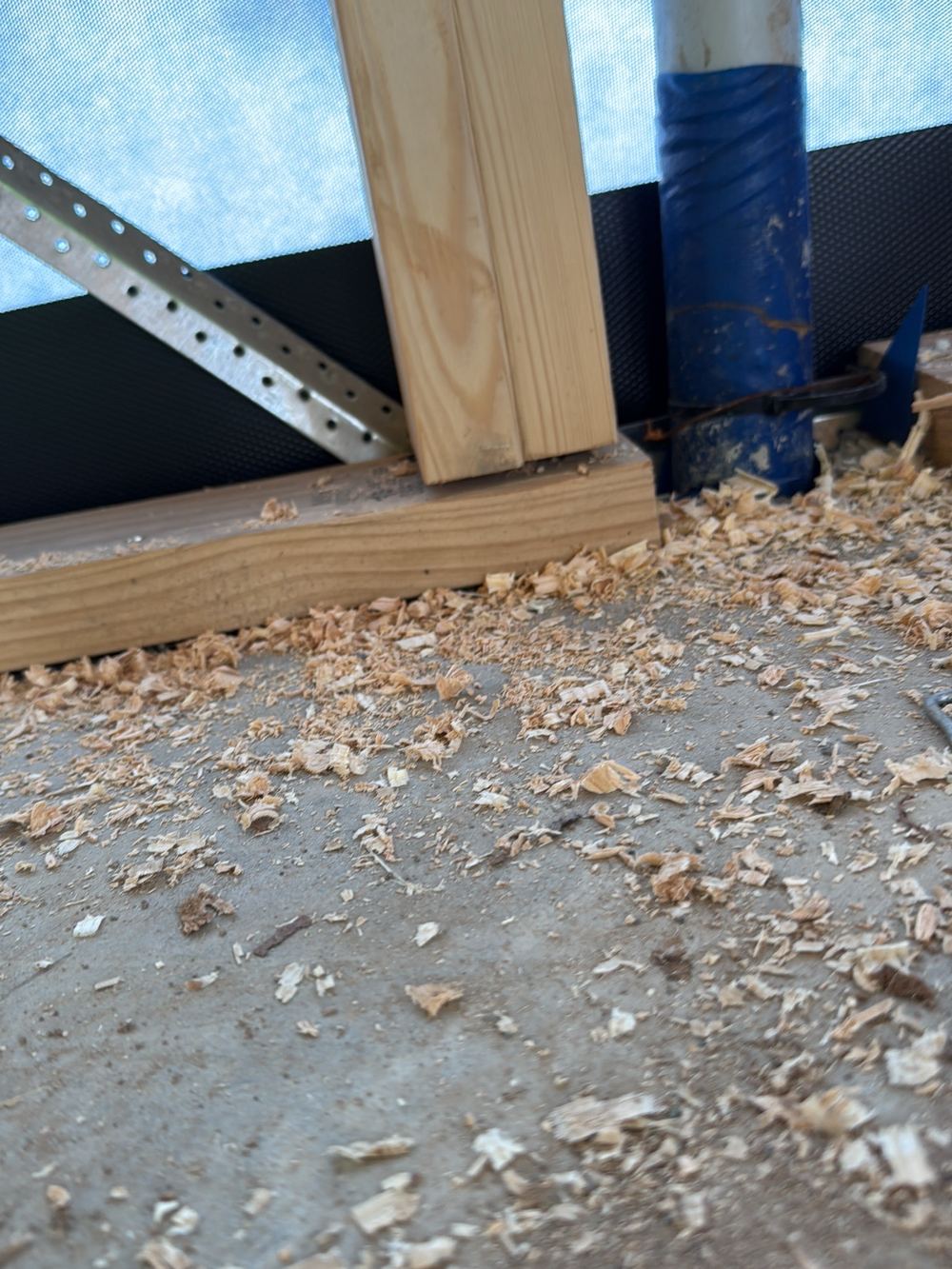
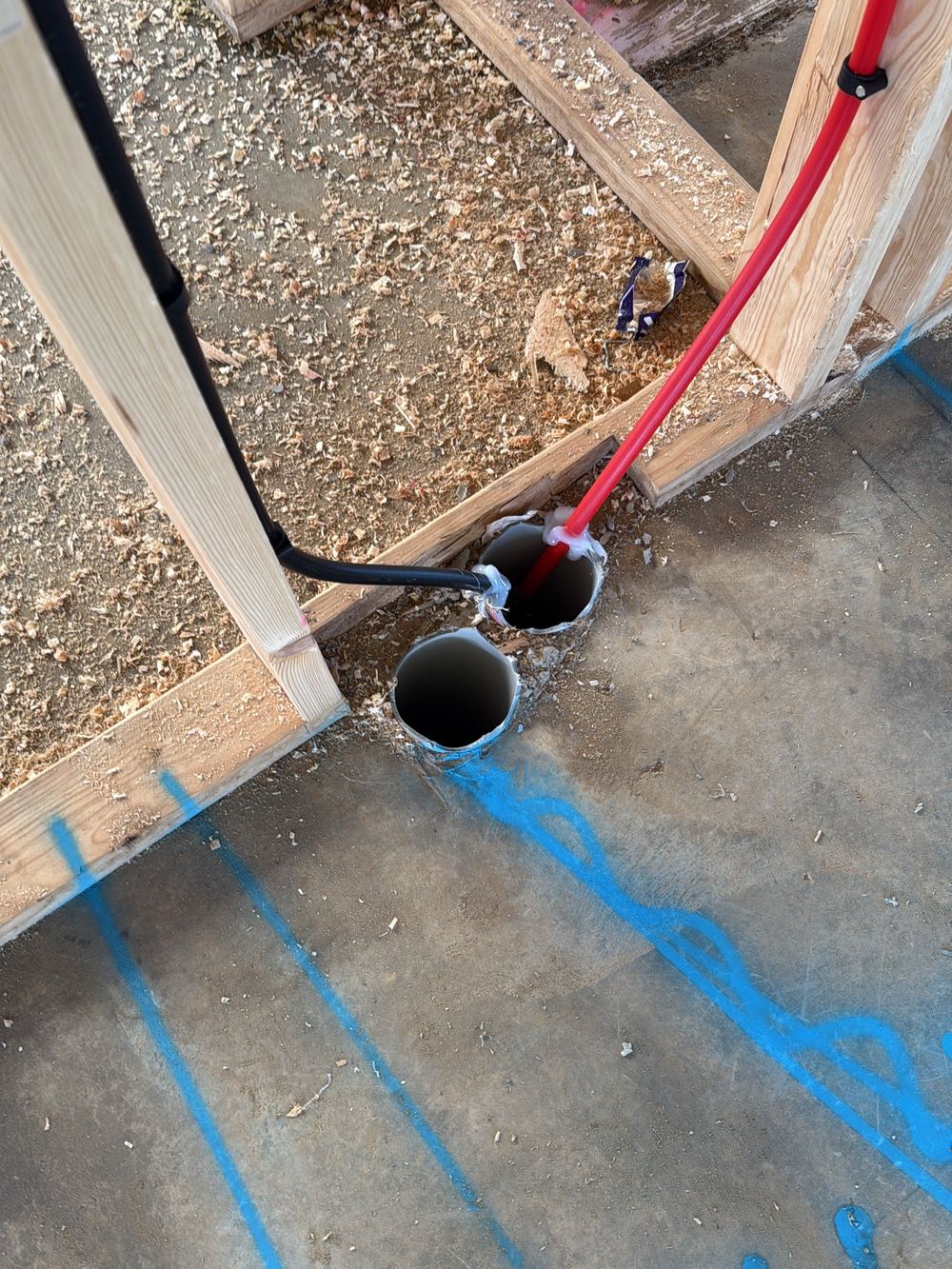
Termite collars in the wrong place on a Clyde North slab
Why the position of a termite collar on a conduit matters, and why it can only be checked before the concrete goes in.
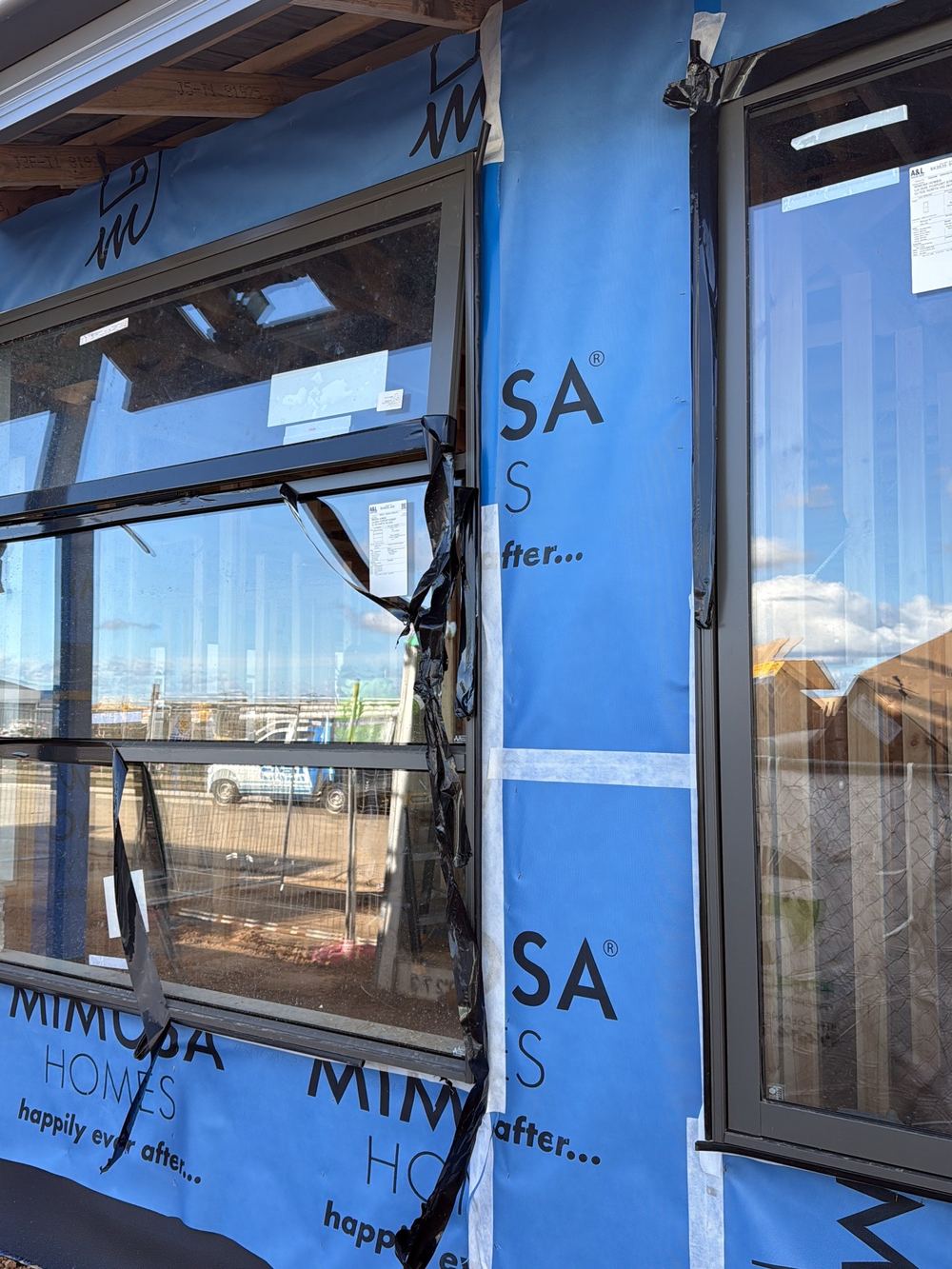
Flashings, sarking and the frame are checked after cladding goes on and before plaster covers the walls.
One of our inspectors will call you back. If it is urgent, call 1300 471 805.
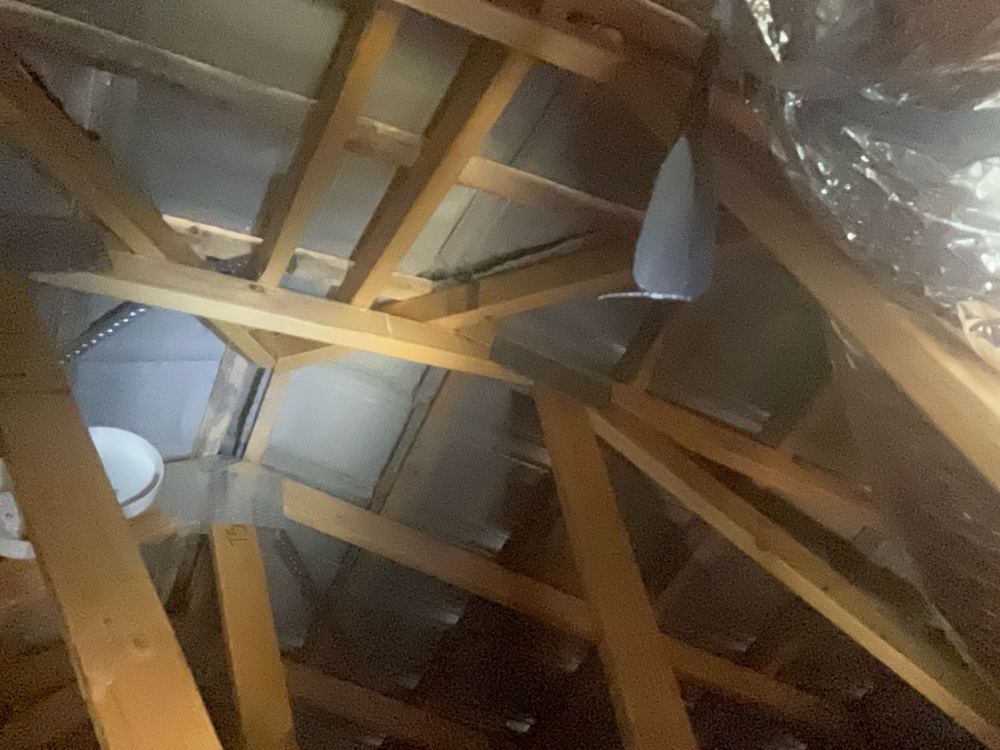
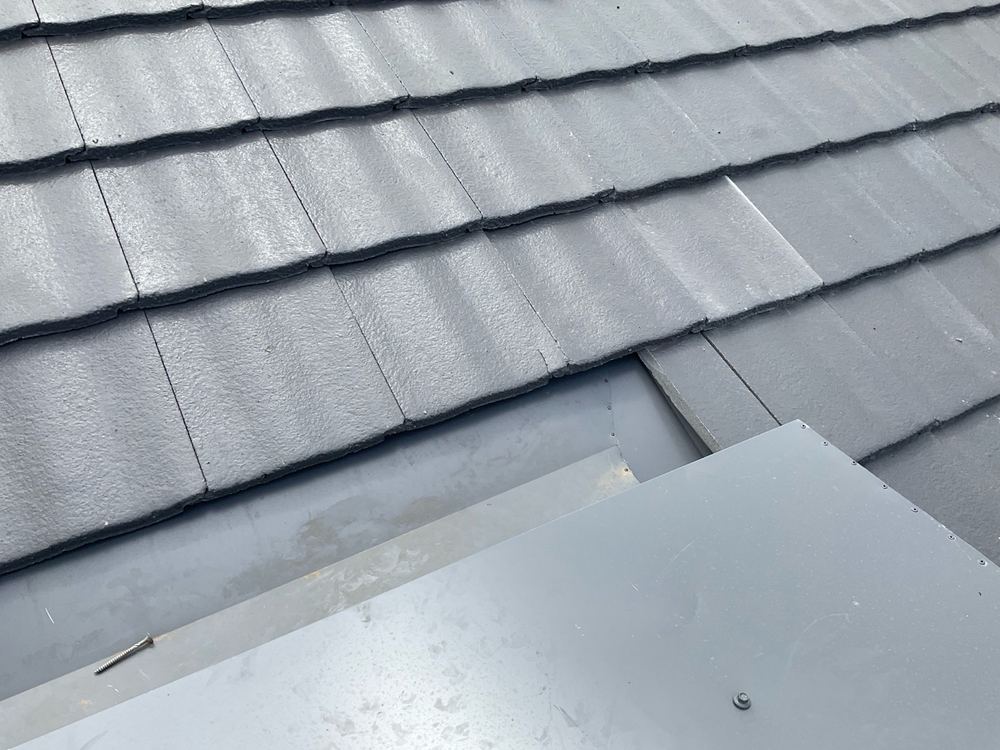
Lock-up in Clyde North is where the weather details get missed. We regularly find window openings with no flashing behind the brickwork, tiled roofs without sarking, and bracing cut through by a trade making room for a pipe or duct. Frame items from the previous visit also turn up here unfixed, and this is the last time anyone can see them.
Annotated findings from Lock-up (pre-plaster) inspections.
 1Bored piersWith the holes bored and cages ready, before the concrete arrives2Slab pre-pourSteel tied and formwork set, the day before the pour
 3FrameWalls and trusses standing, roof cover on, nothing lined
 5FixingPlaster, doors and joinery in, before painting starts
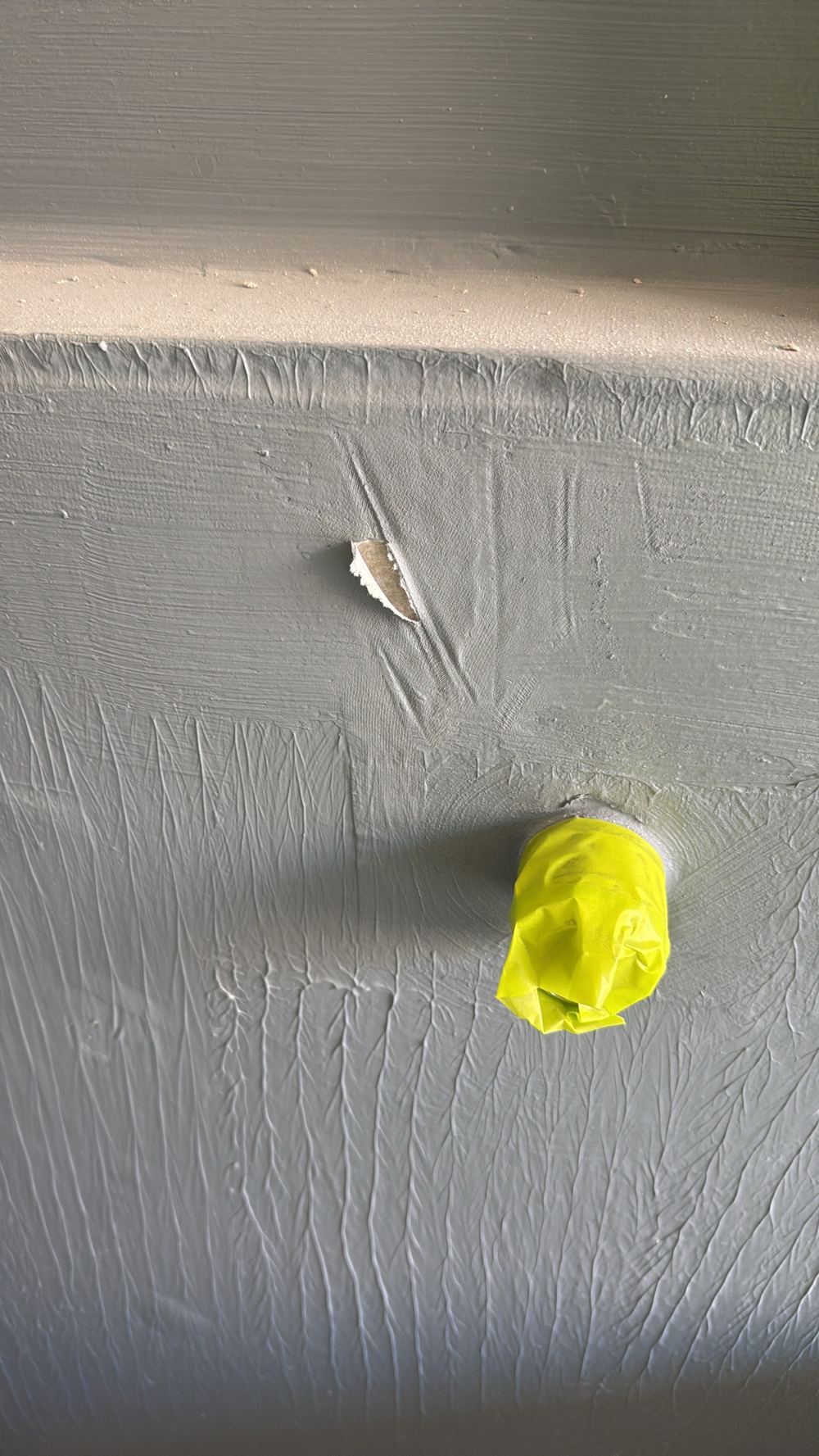 6WaterproofingOnce the membrane has cured and before the tiler arrives
 7Pre-handover (PCI)About two weeks out from the handover appointment
Why the position of a termite collar on a conduit matters, and why it can only be checked before the concrete goes in.
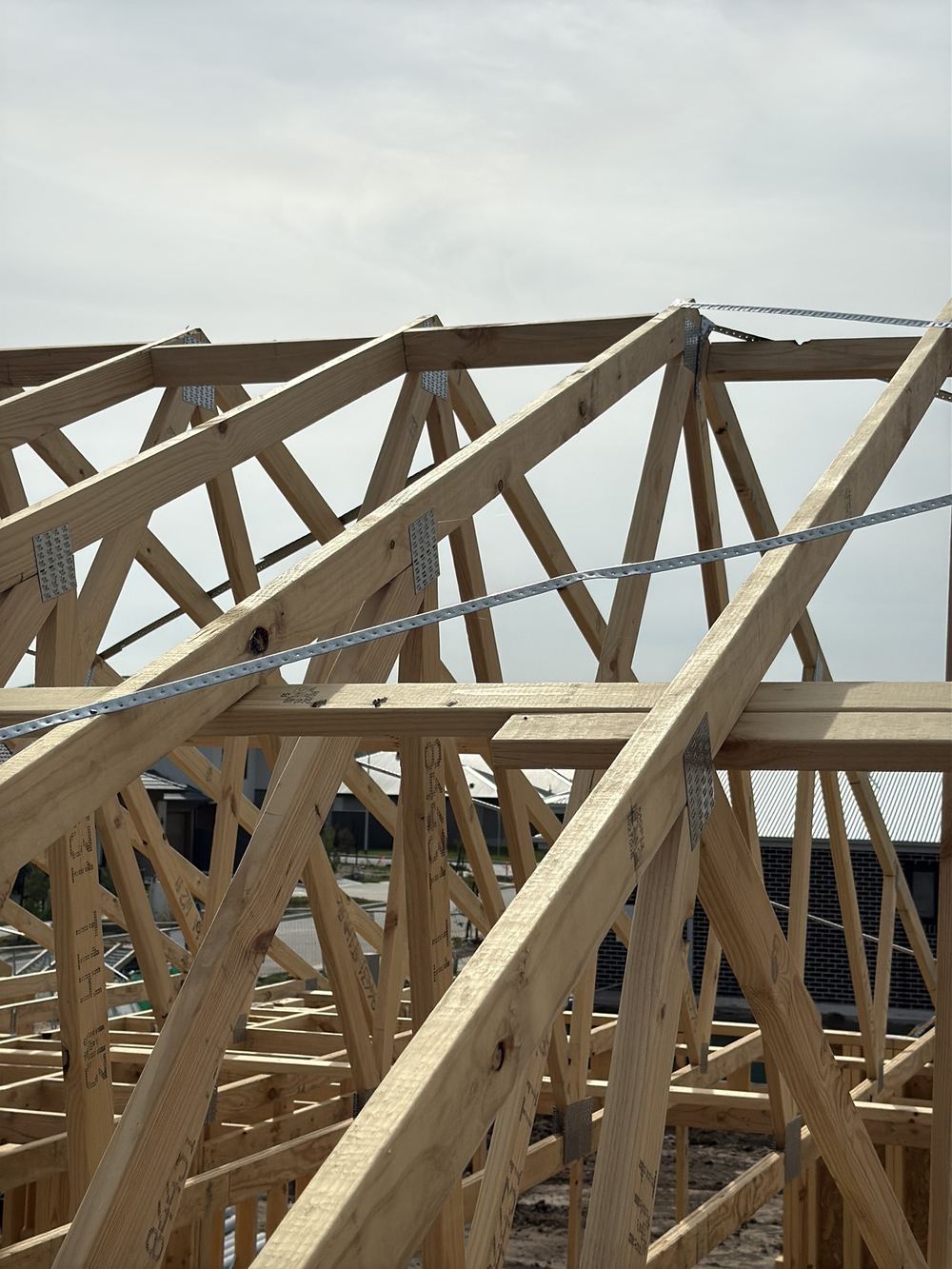
Roof speed bracing only works when it is straight and tight. What we found at a Clyde North frame inspection and why it matters in wind.
Why brick veneer homes need flashings at every window, and why lock-up is the last time to check them.
Instant online pricing, or talk to the booking team on 1300 471 805.
Brick veneer lets some water through by design. The flashing catches it above and below the window and sends it out through the weep holes. Without it, the water runs into the frame and the plaster.
That turns on the roof type, the wind class and your specification. Where it is specified or required and missing, it is recorded as a defect.
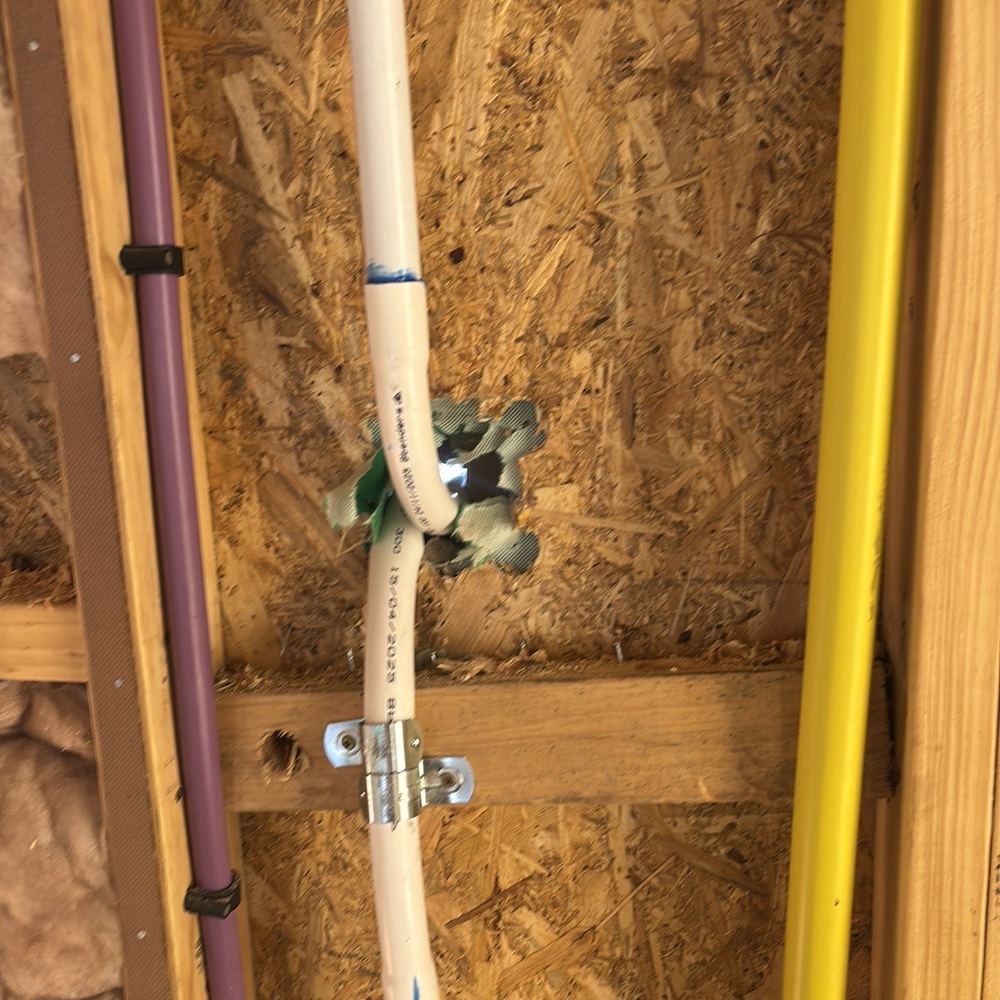
Record it with a photo and location and ask the builder to reinstate it to the engineer's detail. Bracing is part of the structure, not a lining.
Only for visible clashes with the frame, such as bracing cut or plates notched to fit them. Testing and compliance of the services belong to the licensed plumber and electrician.
Around two hours, more on a double storey.
It works best on its own, because it has to happen after the cladding and before the plaster, which is usually a narrow window.