Slack speed bracing in a Clyde North roof frame
Roof speed bracing only works when it is straight and tight. What we found at a Clyde North frame inspection and why it matters in wind.


In short: Speed bracing is a thin steel strap that stops a roof racking sideways. Bent and loose, as we found it on a Clyde North frame, it does very little until the roof has already moved.
A strap that has to be tight
Speed bracing runs diagonally across the top chords of the trusses. It resists the roof leaning sideways under wind. Steel strap carries load only in tension, so it must be straight and pulled tight before it is nailed off. Any slack means the roof moves before the brace does any work.
What we recorded
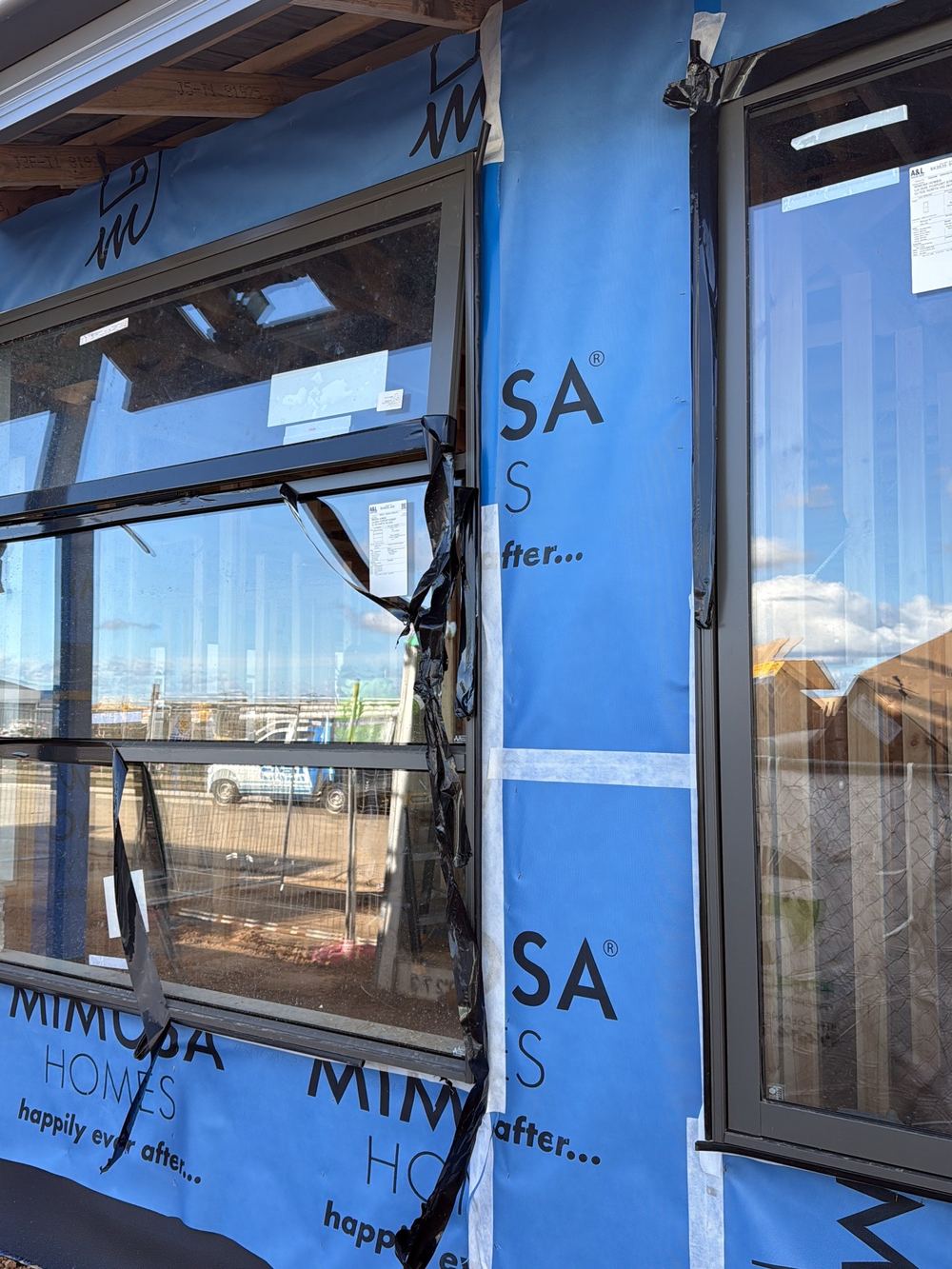
At an April 2026 frame inspection in Clyde North the bracing had been installed bent and distorted along its length. It had clearly not been tensioned. On the same frame we also found a girder truss bearing on a single stud and coach screws used where the connection detail pointed to bolts.
Why it matters here
Many Clyde North homes are double storey with large hipped roofs on open estate lots. Roof bracing is part of how the wind load gets from the roof into the walls and down to the slab. A brace that only engages after movement allows cracking in ceilings and cornices over time.
How it gets fixed
The strap is released, straightened or replaced, tensioned and refixed with the specified nails at each truss and at the ends. Splices must be lapped or wrapped as the manufacturer details. It is an hour of work at frame stage and very difficult once the ceiling is up.
When to look
Frame stage, with the roof on and before insulation and plaster. That is the only time the roof bracing, the tie-down and the stud layout under the girders can all be seen together.
Written by our local inspection team from work carried out in Clyde North. Licensed building practitioners, Building & Plumbing Commission registration CDB-U 53425.